
A bioclimatic pergola is much more than just a structure. It creates a comfortable outdoor space, adapts to the seasons, and adds value to your home. To bring this project to life, however, you must consider the administrative procedures. From urban planning rules to the formalities of obtaining a permit and filing the necessary documents, every step has its place in the process.
In this article, we guide you through the regulations so you can carry out your project with peace of mind and fully enjoy your future pergola.
Is a permit required to install a bioclimatic pergola?
Rules based on surface area and pergola type
Regulations depend on the space your pergola will occupy on your land. If the floor area created by the pergola is less than 20 m², a simple prior declaration is often sufficient. However, for pergolas exceeding this limit, a building permit will be required.
To ensure your project complies with local rules, consult your municipality’s Local Urban Plan (PLU). It may contain specific restrictions, particularly in classified or protected areas.
Steps for a successful prior declaration
Preparing a complete file
Before starting the work, it is crucial to put together a solid file for your declaration. Here are the elements to provide:
– The prior declaration form, available online or at your local town hall.
– Detailed plans showing the pergola’s placement on your land and its integration into the environment.
– A precise description of the work, materials, and the design chosen for your pergola.
Our experts at Biason can assist you in this step to guarantee the compliance of your file.
Filing and follow-up
Once the file is finalized, it must be submitted to your town hall. Processing the request generally takes one month. If adjustments are necessary, the local administration will inform you promptly.
Choosing the ideal bioclimatic pergola for your home
Wall-mounted or freestanding: which configuration to choose?
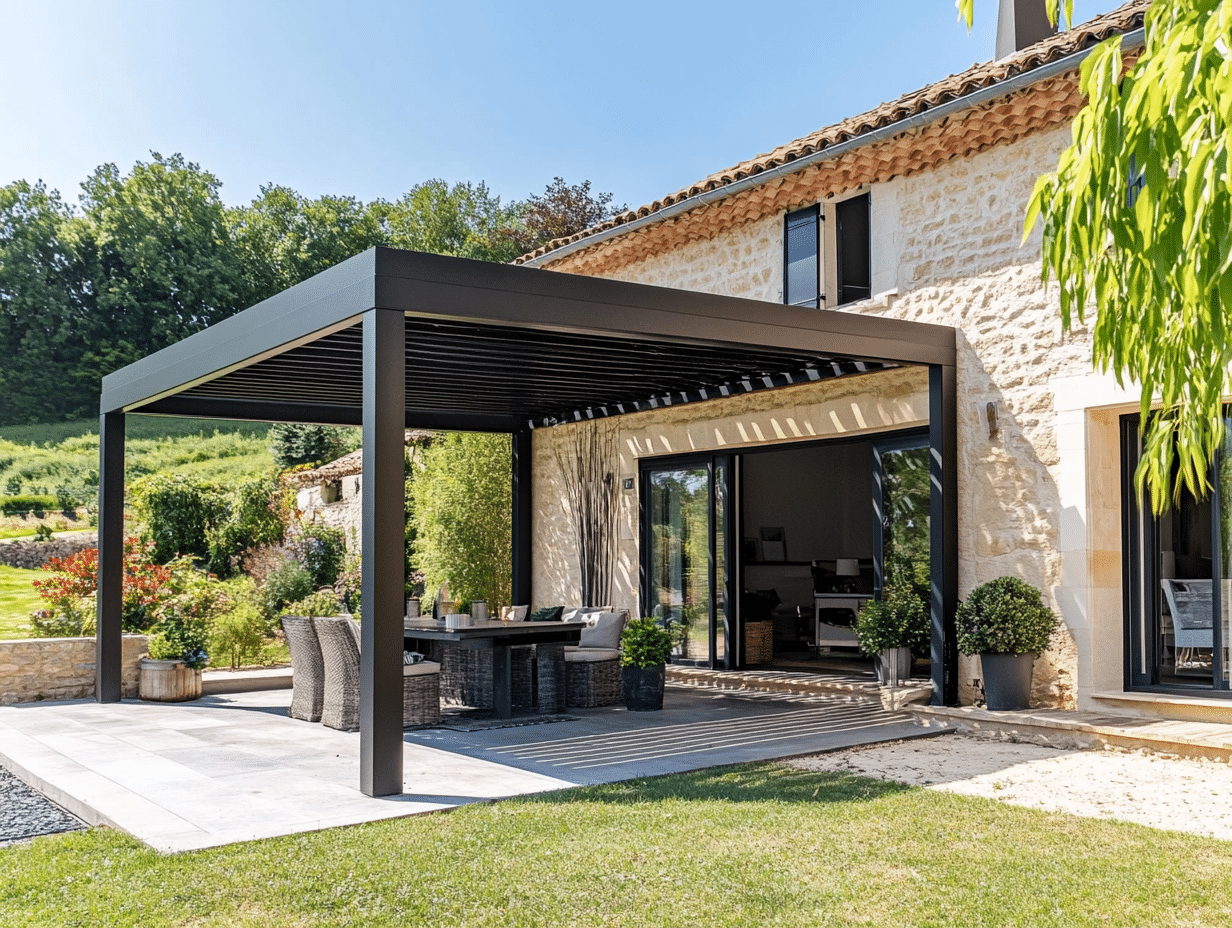
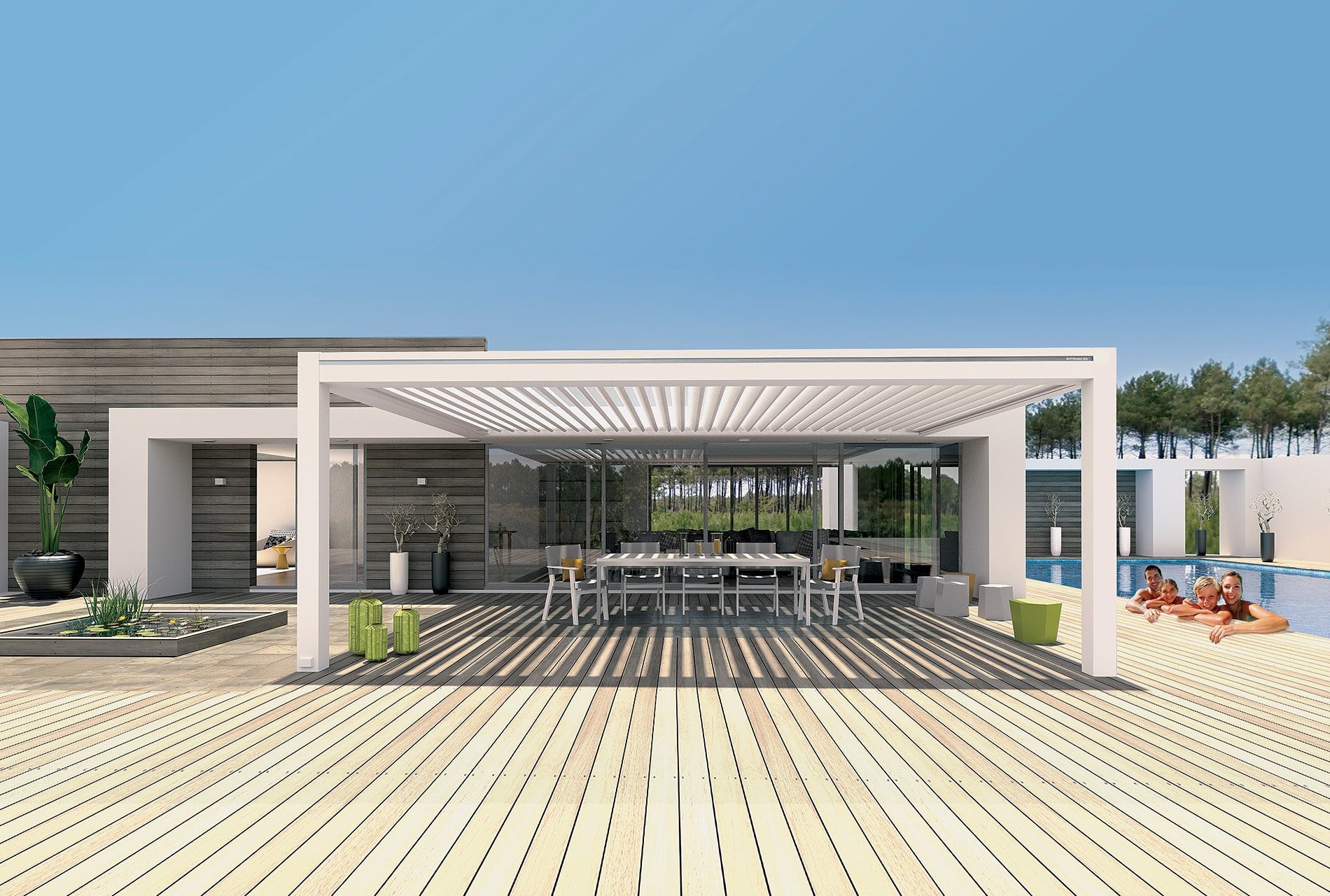
A wall-mounted bioclimatic pergola attaches directly to your home, creating a natural transition between indoors and outdoors. Ideal for covering a terrace, it maximizes space while providing easy access to your house.
In contrast, a freestanding pergola can be placed anywhere in your garden. It offers greater design freedom and fits perfectly into projects requiring a separate zone, such as a relaxation corner or a dining area.
Recommended materials and options
The quality of materials ensures the durability of your pergola. An aluminum structure with **adjustable slats** is perfect for withstanding the elements. Add options such as side blinds or LED lighting to personalize your space.
Complying with regulations for a stress-free project
Key points to check before starting work
Before beginning work, always check:
– Specific rules for your municipality, available at the town hall or via the PLU.
– Restrictions related to the surface area occupied by your pergola.
– Whether a prior declaration or a building permit is required.
A well-planned project reduces the risk of refusal or imposed modifications.
Professional support from Biason
At Biason, we simplify the process for you. We help you prepare your file, handle the submission to the town hall, and ensure all authorization rules are met. Thanks to our expertise, your work is carried out in full compliance for a durable, hassle-free installation.
Installing a bioclimatic pergola transforms your exterior into a comfortable and aesthetic space. Although administrative procedures require some organization, they ensure an installation that complies with regulations.
Entrust your project to Biason, a pergola specialist, for complete support from design to completion. Contact us today for a personalized quote and bring your landscaping dreams to life.