Replacing our joinery in Pau is never just about building work. In this City of Art and History, every facade bears the marks of a century, and every window speaks to an era. So, when it comes to choosing a colour, we inevitably ask ourselves a thousand questions: what we are allowed to do, what is recommended, and what will truly add character to our home without clashing with the rules or local good taste. We hesitate, we doubt a little, we are afraid of getting it wrong. Let us reassure ourselves: there are simple reference points—a facade colour chart, coherent choices depending on the buildings… and professionals like Biason to guide us, without a wrong note.
One might think it is enough to follow one’s instinct and choose a shade one likes—an off-white here, a slate grey there. Yet when it comes to replacing the joinery of a house in Pau—whether you live near Bizanos, Idron, or in the heart of the city centre—things become a little more complex. There is the aesthetic dimension, of course, but also a regulatory framework, sometimes little known, that applies to us. The City of Pau, designated a “City of Art and History”, keeps a close watch over its 19th-century buildings, its 18th-century houses, and its old-style wooden shutters.
So how do you make the right choices? How do you reconcile architectural harmony, personal preferences, and planning regulations? And above all, how do you find your way around the famous facade colour chart that the Architectes des Bâtiments de France recommend for certain projects? We will explore this together, in light of a few simple reference points, practical tips, and what we learned by looking—seriously—into the matter.
Understanding the character of Pau’s facades before choosing a colour
A city shaped by the centuries
When you walk through the streets of Pau, you can feel that the centuries have left their mark. You only have to look up: an arched window here, louvred shutters there, a Haussmann-style balcony on the corner of the square… Each building seems to tell a different story: from the 16th century to the more modern buildings of the post-war reconstruction, the architectural landscape remains remarkably varied. And that is precisely what makes choosing a joinery colour so delicate.
A harmony defined by planning rules
What we often forget is that the City of Pau has put in place a colour guide to preserve the identity of its facades. In protected areas, or near a bourgeois building, you cannot improvise. Certain shades should be prioritised, others avoided—especially if our home is visible from the street. The idea is not to stifle creativity, but to maintain visual consistency that respects the character of the neighbourhood.
The facade colour chart provided by the city is based on a palette inspired by historic pigments: ochre, greyed beige, olive green, and even the deep blue that was already used in the 17th century on surrounds.
The Architectes des Bâtiments de France: true allies
They can be seen as guardians of the temple, a little rigid… Yet the Architectes des Bâtiments de France, often referred to as ABF, play an essential role. They support private individuals who wish to carry out external works visible from the public domain, particularly in protected areas. Their opinion is advisory, but often decisive. And if you prepare your project properly, with the right materials (such as wood, PVC-aluminium or aluminium-wood) and an appropriate colour, approval is generally straightforward.
To find out more, you can consult:
the Ministry of Culture website on the City and Country of Art and History label
the Service-public.fr page dedicated to work authorisations in protected areas
the CAUE of Pyrénées-Atlantiques, for free advice on facade aesthetics
Which colours for your joinery in Pau? Our tips by style and period
If your home dates from the 16th to the 18th century
Here we enter a raw charm: old stone, irregular surrounds, and that patina time has gently laid on the walls. In such cases, it is best to opt for muted shades inspired by natural pigments. Think of:
Verdigris, soft and mineral, perfect alongside a pebble or blonde-stone facade.
Red ochre, very common in the buildings of Idron or Morlaàs.
Lead grey, which adds depth without flattening the volumes.
These shades harmonise with wooden shutters, but also work with aluminium-wood for a more contemporary effect without betraying the spirit of the place.
For 19th-century or Haussmann-style homes
This is often where things go wrong. Bourgeois buildings have a restrained elegance, often highlighted by symmetrical surrounds and wrought-iron balconies. You might think a bright white will do the job. A common mistake.
It is better to choose:
Warm greys (taupe grey, clay grey)
Deep blues, between ink and steel
Empire green, very chic on small-pane windows
The historic colour palette of the 19th century remains an excellent source of inspiration. It helps you stay consistent with the urban environment while asserting a personal touch.
And what about more modern buildings?
You sometimes have more freedom, that is true. But that does not mean doing just anything. The recent residential areas of Lons, Gan or Bizanos benefit from more flexible planning rules, provided you remain consistent. To avoid taste mistakes, you can opt for:
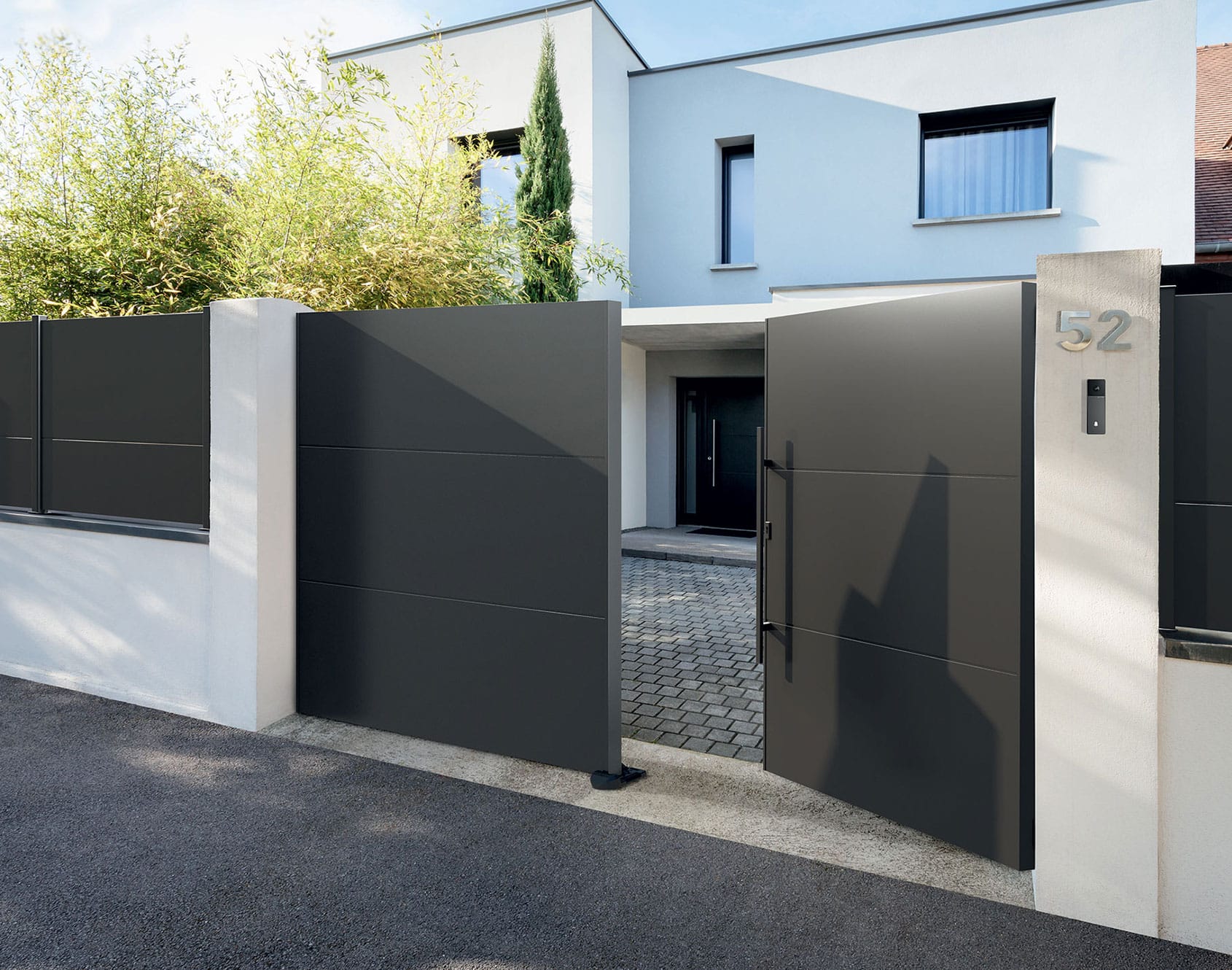
PVC-aluminium windows in stone or anthracite tones
Sliding patio doors with a bronze or matte black finish
A subtle contrast between joinery and a light-coloured facade, to enhance the volumes without overdoing it
The idea remains to create overall harmony, based as much on aesthetics as on value for money over the long term (particularly in terms of thermal insulation).
Preparing your project with peace of mind with Biason: expertise, shades and authorisations
Replacing our windows, doors or shutters in a city like Pau is not only a matter of aesthetics. It is an undertaking that combines taste, technical considerations, and sometimes… administration. You often only realise this in the middle of the worksite, when you discover that a simple replacement of facade joinery may require prior authorisation, especially in protected areas.
With Biason, you avoid these surprises. The team knows the specificities of each neighbourhood, whether you live in Jurançon, Gan or in the historic heart of the City of Pau. They adapt to constraints, anticipate the expectations of the Architectes des Bâtiments de France, and offer tailor-made solutions suited to the local colour palette as well as the thermal performance required today.
And then there is the detail that changes everything: you feel listened to. No stock answers, no long-winded quotes without explanation. We talk about materials (wood, aluminium-wood, PVC-aluminium), we discuss the available shades, and we look together at what will best enhance our facade.
We particularly appreciated:
Clear communication from the very first appointment
Knowledge of the facade colour chart required in Pau
Practical advice to avoid an authorisation refusal
Respect for traditional styles without giving up modernity
The quality of the workmanship, right down to the finishes
In short, a craftsman’s approach, but with a true architect’s eye.
Choosing a joinery colour in Pau is not a minor detail. It is a way of engaging with the history of the place and highlighting what is most beautiful about our home. We sometimes hesitate between following the rules and asserting our style. But the two are not incompatible.
With a little listening, a good dose of advice, and the trained eye of a professional, our project takes shape smoothly. If you are still hesitating between two shades or do not know where to start, there is no need to face the colour chart alone.
At Biason, we do not only talk about windows or shutters. We talk about a life project, light, and consistency. So, if you feel like it, take the first step. We will reply with as much precision as kindness.